Paolla — e-commerce for a shoe manufacturer
A digital platform for a Ukrainian shoe manufacturer with 30+ years in the market
About the company
Paolla is a Ukrainian shoe manufacturer with over 30 years behind it, making comfortable, well-made shoes for every age group at prices people can afford, to European quality standards.
Project challenges
A long-established manufacturer needed a modern digital presence, its online and offline sales channels joined up, and a way to show a wide range properly.
Our solution
- ✓ An e-commerce platform with a full catalogue
- ✓ Made-to-order shoes
- ✓ Integrated with the production floor
- ✓ Personal consultations online
- ✓ SEO for the local market
Features
- • Catalogue with filters by style and size
- • Made-to-order flow
- • Online consultation and support
- • CRM integration for order management
- • Mobile-first design
Technology
Results
- ✓ A modern platform for a company three decades old
- ✓ Ordering shoes online without friction
- ✓ Production and e-commerce joined up
- ✓ Better communication with customers
- ✓ A wider online presence for the brand
Category
Manufacturing E-commerce, B2C, Custom Production, Ukrainian Market
How it runs
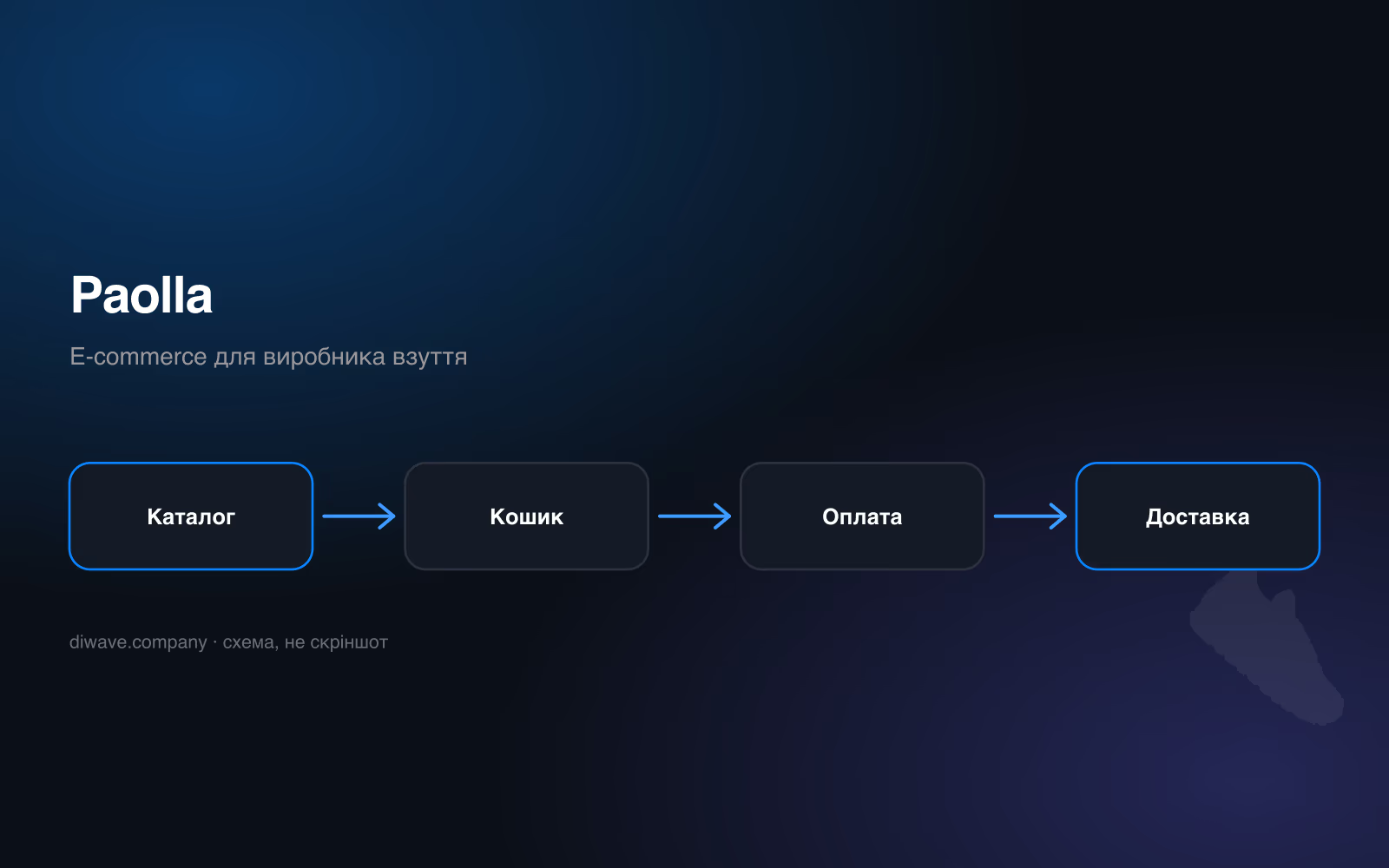
A buyer lands in the catalogue and narrows it with filters by style and size — the two questions anyone answers first when looking for shoes. The manufacturer's range is wide, so without filters the catalogue becomes a feed nobody scrolls to the end of.
If the pair they want is not there, the path does not end: the made-to-order flow takes over. This is where the online side meets the factory floor — the order does not sit in an inbox, it goes into the CRM and on into production. The online consultation keeps that step alive: a question about size or material is cheaper to settle before the order than to handle as a return after it.
The site doubles as the corporate presence of a company three decades old: it shows the production behind the products, not just a shop window. The layout is mobile-first, because shoes are browsed from a phone more often than from a desktop, and the SEO is tuned for the local market — the one the company actually sells in.
What to check before starting a similar project
- • How many items the catalogue really holds. The width of the range decides whether filters are needed from day one or a plain list will do.
- • What counts as a made-to-order item. A changed size, a changed material and a pair built from scratch are three different routes through production, and the form on the site has to tell them apart before the order reaches the floor.
- • How an order gets into production. If a manual hand-off remains between the site and the floor, the CRM becomes a copy rather than the source.
- • Who answers an online consultation, and when. A consultation with nobody at the other end is worse than none at all.
- • Which device the buyer will arrive on. The mobile version is checked before launch, not after the first complaints.
FAQ
Can a customer order a pair that is not in the catalogue?
Yes — that is what the made-to-order system is for. It carries the request from the site into production rather than leaving it as a separate message somebody has to remember to pass on.
Why does a manufacturer with thirty years behind it need its own e-commerce?
Because the offline channel and the online one had been living apart. The platform brings them together: the catalogue shows what is actually made, and an order from the site joins the same flow as every other order.
How is the catalogue different from a plain product list?
The filters by style and size, and the link to the CRM. A list shows what exists; this catalogue answers the question "what exists in my size" and carries the visitor on to the order.