Retail & eCommerce
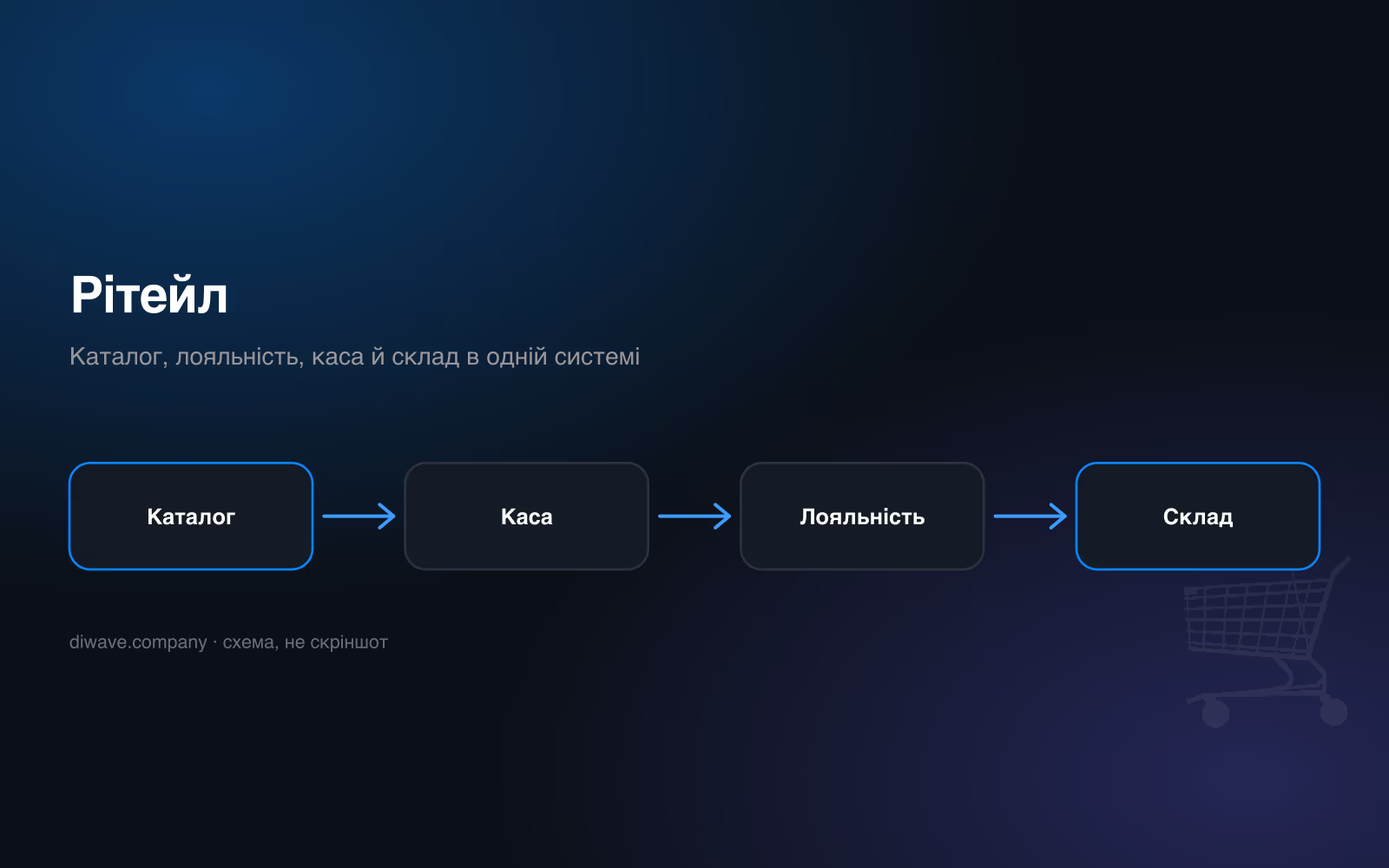
CMS/ERP integration, cart, stock, delivery and a checkout that does not lose the buyer, plus SEO that grows organic traffic for the store.
Case
For the Plantpol nursery we built a B2B online store: 7,422 products, wholesale pricing that depends on the customer and the volume, and a catalogue that follows the season.
The warehouse syncs both ways: stock levels from the accounting system go to the site, orders from the site go back to the warehouse. The buyer sees what is actually in stock, and the manager does not re-key orders by hand.
Angular SSR on the front end for speed and indexing, Laravel on the back end.
Where retail with a large catalogue breaks
A catalogue of several thousand items lives its own life: prices in one place, stock in another, the site showing a third version. A manager reconciles by hand, the customer orders something unavailable, and comes back less often.
The second issue is orders. At ten a day one person holds it together. At a hundred you need a system that checks availability itself, calculates shipping, produces documents and refuses to assemble a broken order.
What we do
Catalogues with thousands of items
Categories, attributes, search and filters that work at volume, not on a twenty-product demo.
Stock synchronisation
Warehouse and site see the same picture. What is not there does not sell.
Orders and documents
From basket to invoice and delivery note. Documents generate themselves, without retyping company details.
Payments
Online payment, cash on delivery, bank transfer for business customers.
Shipping
Carrier integration, cost calculation, waybill creation and tracking.
B2B layer
Personal pricing, deferred payment, purchase history — what a plain shop does not have.
What it runs on
Angular with server-side rendering for speed and search visibility, Laravel on the backend, MySQL. Integrations with accounting systems and carriers. This stack holds a catalogue of thousands of items without losing speed.
Our evidence
Plantpol — nursery e-commerce for the Polish market: 6,925 orders, 68,804 order lines, a 7,422-product catalogue, 1,811 registered buyers. Figures from the live database, not a slide.
Frequently asked
Do you build on a ready platform or from scratch?
Can an existing shop be migrated?
What about foreign markets?
Answers on this topic
Plain explanations without marketing — useful even if you never hire us.
Who writes the software that runs self-service kiosks
A self-service kiosk is a box; the software behind it makes it a business: take payment, drive the hardware, reconcile the money by morning.
Card payments for vending machines without a cashier
MDB reader, bank terminal or QR: three ways to take cashless payments on a machine, fiscal receipts without a cashier, per-machine reconciliation, offline mode.
Fiscal receipts from a terminal with no cashier
How a receipt reaches the tax authority from an unattended terminal: who issues it, when, what happens when the link drops, and where the gap usually appears.
Per-device revenue reconciliation: catching shortfalls
Daily reconciliation for car washes, vacuums and vending: three numbers per device that must agree, where gaps come from, how to tell a fault from abuse.
Selling on WhatsApp: the 24-hour window and lost messages
How the WhatsApp Business API actually behaves: the 24-hour window, templates, and why an "ok" from the API does not mean the customer saw your message.