Cybersecurity
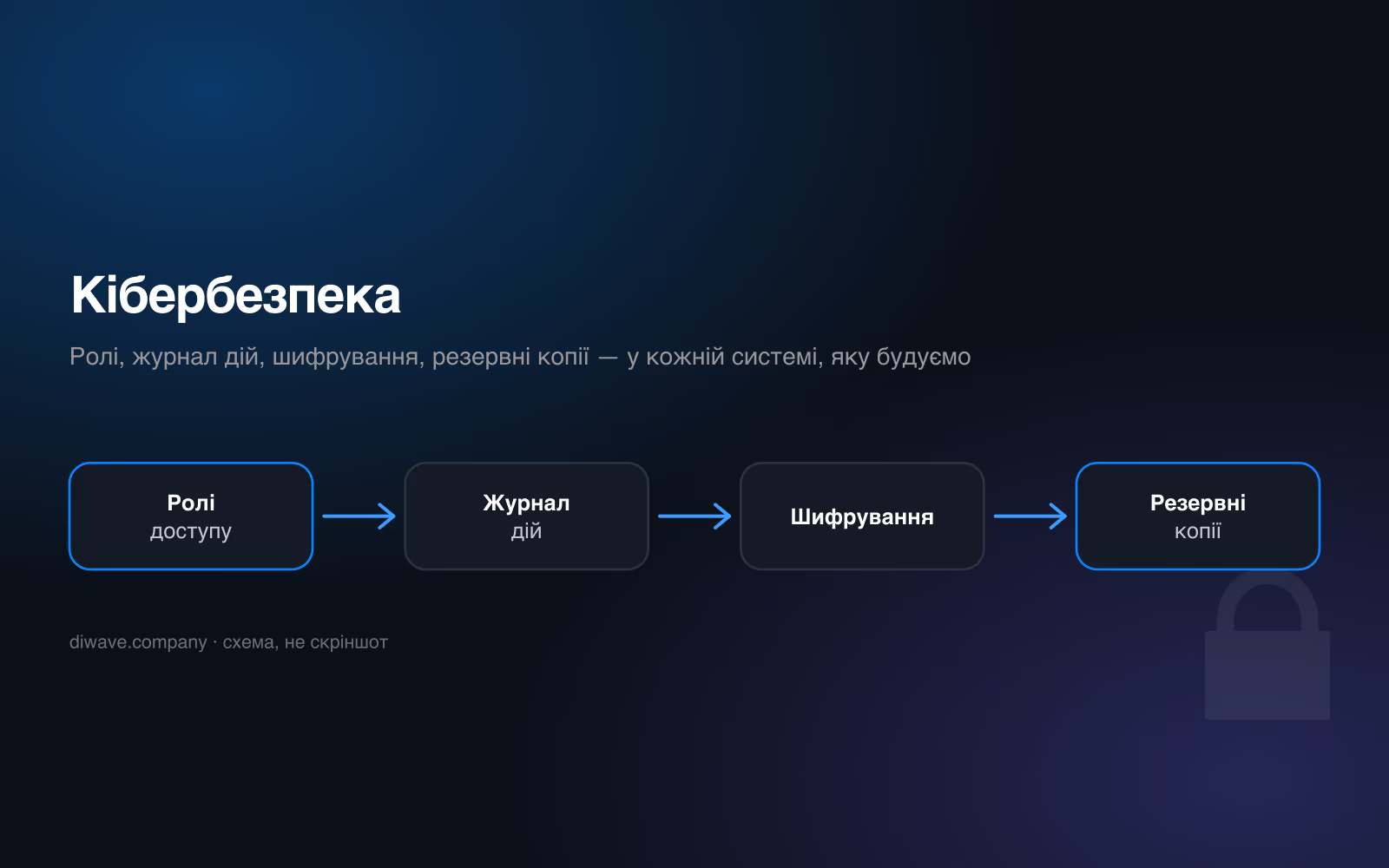
We encrypt files before they hit disk, check permissions on the server, keep an action log and verify headers before every deployment.
The angle we come from
Plainly: we are not security auditors and we do not sell penetration testing. If you need an independent audit or certification, that belongs with specialist firms, and we say so honestly.
Our part is different. We build systems that carry money and personal data: payments on unattended devices, documents with company details, scanned identity papers. In such systems security is not a separate service but a condition of delivery.
What we do in every project
Encrypting sensitive files
Documents are encrypted before hitting disk. A backup without the key gives no access to content.
File type by content
Checked by magic bytes, not by extension or the client-supplied header. A renamed file does not pass.
Access separation
Roles and permission checks on the server, not hidden buttons in the interface. Hidden in the UI is not protection.
Action log
Who opened a record, who downloaded a file, when. Without a log a dispute cannot be resolved.
Headers and transport
HSTS, CSP, rate limiting, request forgery protection. Verified automatically before every deployment.
No data in logs
Request bodies are never logged: they contain client correspondence and personal data.
How we hold this
AES-256-GCM for files, signed session cookies, an encryption key stored apart from backups, automated checks of headers and common mistakes before every deployment. This does not make us a cybersecurity company — it makes our systems deliverable where money and personal data are involved.
Frequently asked
Do you do penetration testing?
Who holds the encryption keys?
Can you help after an incident?
Answers on this topic
Plain explanations without marketing — useful even if you never hire us.
An IoT/SCADA platform for a small plant: what you need
Seven layers of an IoT/SCADA platform: Modbus RTU/TCP over RS-485, gateway, telemetry, history, alarms, phone. Offline buffering, Raspberry Pi, security, cost.
Modbus: what it is and why your business should care
Plain explanation of Modbus RTU and TCP: how equipment exposes data, the difference between RTU and TCP, and what to do if your device does not support it.
Telemetry where the link drops for hours
Telemetry where the mobile link drops for hours: store-and-forward, clock drift, deduplication, staleness on the dashboard, alerts that do not cry.