IoT & SCADA
We poll controllers over Modbus, collect telemetry even on poor links and count revenue per site. Proven on 14M payment transactions.
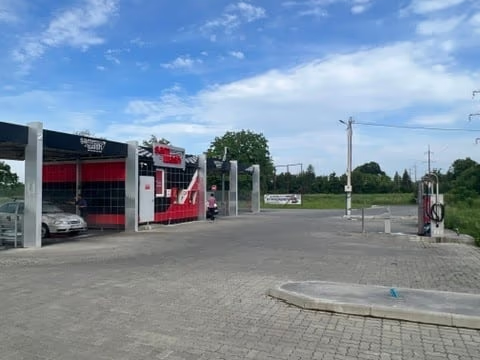
Case
Telemetry for the SamWash car wash network: bay controllers are polled over Modbus, and the state of every device and every session goes to the server. It is not a dashboard on top but the layer the payments and accounting rest on.
Connectivity on site is unreliable, so a bay runs on its own and, once the link is back, backfills the server with what it accumulated — nothing is lost and nothing is duplicated.
Diagnostics are remote: equipment faults are visible from the office, and a technician's visit becomes targeted rather than routine.
How the conversation usually starts
The equipment is installed and running, but the owner learns about a breakdown from a customer phone call. How much money went through a specific bay yesterday can only be counted by hand. The data sits inside the controller, but nobody can get it out.
The second common case: equipment from several manufacturers, each with its own protocol and its own closed dashboard. There is no consolidated picture, because nobody has stitched it together.
What we do
Polling controllers
Modbus RTU and Modbus TCP, reading registers, writing control commands. We work with the equipment already installed — no replacement required.
Telemetry over poor links
Event queue on the device, backfill once the channel returns. A site on the edge of town with unstable 4G does not lose shift data.
Cash accounting
Bill and coin acceptors, payment terminal, daily revenue reconciliation per site. Discrepancies surface the same day, not at month end.
Dispatcher panel
Equipment status, alarms, revenue per site and per bay. Web-based, nothing to install.
Alerts
Failure, downtime, unusual behaviour — a message to the person who will actually drive out, not a line in a log.
Accounting integration
Export to bookkeeping and warehouse systems so nobody retypes figures.
What it runs on
Modbus RTU/TCP, RS-485, industrial gateways, MQTT for event transport. Backend in Node.js and PostgreSQL, web panel. Where control must happen on site, we write C# for the control tablet. We do not sell a boxed product: the system is built around the equipment you already own.
Our evidence
SamWash self-service car wash network: over 14 million payment transactions processed. Not a pilot and not a demo — the software has been driving hardware and counting real money under load for years. Few teams in industrial automation can back their claims with a number like that.
Frequently asked
Do we have to replace equipment?
What if the site has poor internet?
Do you do software only, or hardware too?
Can we start with a single site?
Who owns the system after delivery?
Answers on this topic
Plain explanations without marketing — useful even if you never hire us.
An IoT/SCADA platform for a small plant: what you need
Seven layers of an IoT/SCADA platform: Modbus RTU/TCP over RS-485, gateway, telemetry, history, alarms, phone. Offline buffering, Raspberry Pi, security, cost.
Modbus: what it is and why your business should care
Plain explanation of Modbus RTU and TCP: how equipment exposes data, the difference between RTU and TCP, and what to do if your device does not support it.
RS-485 on site: what breaks and why
Why an RS-485 bus works on the bench and fails on site: termination, ground loops, cable length, star wiring, noise, Modbus RTU timing. How to diagnose it.
Telemetry where the link drops for hours
Telemetry where the mobile link drops for hours: store-and-forward, clock drift, deduplication, staleness on the dashboard, alerts that do not cry.